

Every shelter has pets who stay longer than expected.
The two-year-old dog who has been walked by every volunteer. The senior cat who gets passed over for kittens. The bonded pair people admire but hesitate to commit to.
When length of stay climbs past 30, 60, or 90 days, the instinct is to increase exposure. Post more. Share again. Boost a photo.
Sometimes that helps. Often, it doesn’t.
If you want to reduce length of stay for hard-to-place pets, marketing has to be intentional. Louder isn’t better. Clearer is.
What “Hard-to-Place” Pets Really Mean in Animal Shelter Marketing
The phrase “hard-to-place pets” gets used broadly, but it hides important differences. For marketing strategy, those differences matter more than the label itself.
A 70-pound adolescent dog in a rental-heavy community faces a housing barrier. A diabetic senior cat faces a perceived medical burden. A dog who needs to be the only pet faces lifestyle restrictions. A bonded pair faces financial doubling.
Each of those situations requires different messaging. It may also require different channels, timelines, and levels of staff involvement.
In a college town where 60% of adopters rent, dogs over 40 pounds may see dramatically lower application rates. If local rental policies commonly cap weight at 50 pounds, repeated posting will not solve a structural barrier.
In suburban areas with strong senior communities, older cats may move faster than young, high-energy kittens. In that case, emphasizing calm companionship rather than age may increase applications.
In municipal shelters with limited foster programs, behavior-restricted dogs may accumulate length of stay because adopters have limited opportunities for trial placement. Without foster-to-adopt or weekend trial options, marketing alone may not close the gap.
If you lump all of them together under a single “long-stay” campaign, you miss the real barrier. And when the barrier is misidentified, promotion becomes noise rather than strategy.
Before adjusting promotion, define why this specific pet hasn’t moved. Is it exposure, perception, policy, or process?
| Image | Summary | Link |
|---|---|---|
 | They didn’t choose to end up here—but they’re still full of love to give. Your decision to adopt can change everything for a pet waiting for a home. #… Oh, no! This content requires a higher membership level to view. Not a member? Join for Free Today or Upgrade Your Account to Pro. … | |
 | There’s an empty spot waiting for a tail wag (or a quiet purr). #AdoptToday #RescuePets #ForeverHome #AdoptDontShop… Oh, no! This content requires a higher membership level to view. Not a member? Join for Free Today or Upgrade Your Account to Pro. … | |
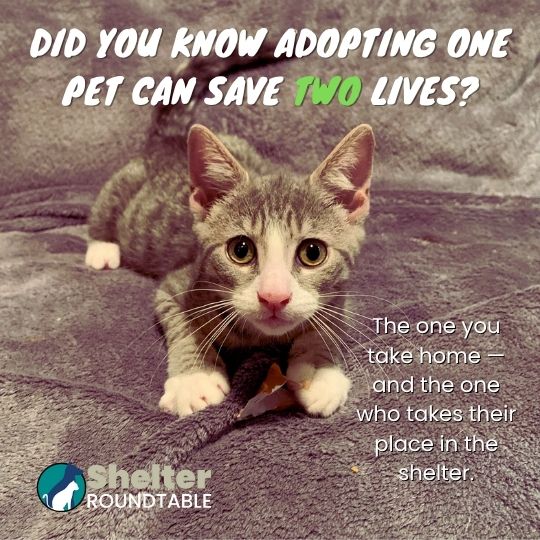 | When you adopt one pet, you’re really saving two lives — 🐾 the one you take home, and 🐾 the one who takes their place at the shelter. Adoption makes r… Oh, no! This content requires a higher membership level to view. Not a member? Join for Free Today or Upgrade Your Account to Pro. … |
How to Diagnose Your Adoption Funnel Before Changing Your Marketing Strategy
Marketing decisions should follow data, even in smaller shelters. Even basic tracking can reveal where the real friction sits.
Pull simple numbers for the past 30 days:
- Profile views
- Social reach
- Applications submitted
- Applications approved
- Adoptions completed
If possible, compare these numbers against your shelter-wide averages to see whether the issue is isolated or systemic.
Now look at the ratio.
Example:
- 1,200 profile views
- 22 applications
- 8 approved
- 5 completed adoptions
That’s not a visibility problem. This suggests reasonable conversion and may indicate that continued rotation is sufficient rather than aggressive promotion.
Compare that to:
- 250 profile views
- 2 applications
- 1 approved
- 0 completed
That’s a distribution problem. The pet is not being seen consistently or widely enough.
Or:
- 900 profile views
- 30 applications
- 4 approved
- 1 completed
That may signal overly restrictive criteria, unclear expectations, or screening bottlenecks. It may also indicate that the listing attracts interest but discourages commitment.
Promoting harder without identifying the weak point simply increases workload. It rarely increases completed adoptions. Hard-to-place pets often expose weaknesses in the funnel that affect all animals. Fixing those weaknesses can improve overall adoption flow, not just one case.
How to Promote Hard-to-Place Pets Without Overwhelming Shelter Staff
Targeted promotion increases inquiries. Inquiries increase phone calls, email replies, application reviews, and counseling time. If your response time stretches past three to five days, momentum often fades.
One shelter that boosted a long-stay dog’s post to a 20-mile radius saw reach jump from 3,000 to 18,000 in 48 hours. They received 53 inquiries. Only four were local. Staff spent roughly eight cumulative hours responding.
The dog was adopted. The team was exhausted. And other daily operations slowed during that spike.
Marketing capacity has to match operational capacity. Otherwise, urgency in one area creates strain in another.
Before launching a campaign, ask:
- Do we have staff time to respond thoughtfully?
- Is our application review turnaround under 72 hours?
- Can we manage follow-up conversations?
Promotion without bandwidth increases frustration for both adopters and staff. It can also damage trust if inquiries go unanswered.
How to Write Adoption Listings for Hard-to-Place Dogs and Cats
Many hard-to-place pets carry restrictions that sound intimidating when listed bluntly. Clarity is necessary, but your tone is optional.
Standard listing:
- No other pets
- No children under 12
- Needs fenced yard
- Experienced handler only
All may be accurate. But this structure leads with exclusion.
Compare that with:
- Thrives as the only pet where he can bond closely with his person
- Best suited for a calm, adult household
- Enjoys daily structured walks and predictable routines
- Would do well with an adopter familiar with confident, working breeds
You can see that the requirements remain, but the emotional framing has been changed. Compatibility-based language reduces perceived risk without hiding reality. It also helps adopters visualize success instead of failure.
Should Your Shelter Run Long-Stay Pet Spotlight Campaigns?
A structured spotlight like “Long Stay of the Week” can improve visibility and repetition. It works especially well in shelters where daily posts move quickly through feeds.
But spotlight fatigue is real.
If every feature uses the same caption format and similar photography, engagement drops. Followers recognize the template and skim. Analytics may show steady reach but declining comments and shares.
Variation matters. One week might include a foster diary entry. Another might share a short video clip of training progress. Another might focus on a staff member explaining what makes that pet special. Even rotating the visual format — photo, short reel, carousel — can refresh attention.
The goal is not to put out more posts, but to give the animal renewed attention. Renewed attention is different from repeated exposure.
Should You Use Paid Ads to Promote Hard-to-Place Shelter Pets?
Paid ads can be effective when organic reach plateaus. But be careful when doing online advertising, like boosting Facebook posts. If you’re not careful, you can waste your budget and target people you don’t want to reach.
Before boosting:
- Confirm your geographic radius aligns with your adoption policies.
- State restrictions clearly to reduce mismatched inquiries.
- Ensure your website page is current and application links work seamlessly.
- Review whether your team can handle increased interest.
- Clarify expected timelines so adopters are not left guessing about next steps.
If your shelter requires in-person meet-and-greets during weekday hours only, widening your digital reach without adjusting process may frustrate potential adopters. Interest without access rarely converts.
Paid promotion amplifies whatever system already exists — strong or weak. If your funnel converts well, it accelerates success. If it leaks, it accelerates frustration.
When the Barrier Isn’t Marketing at All
Not every long-stay case is solvable through better messaging.
In some communities:
- Rental policies exclude certain breeds outright.
- Insurance restrictions limit larger dogs.
- High medical cost perception deters adopters even with subsidies.
- Local economic conditions reduce discretionary spending overall.
In these cases, broader partnerships may matter more than better captions. Landlord outreach. Medical sponsorship programs. Foster-to-adopt models. Community education about realistic pet ownership costs.
Promotion is only one lever. Sometimes the real shift happens outside social media entirely. Marketing supports strategy; it does not replace it.
Checklist: How to Reduce Length of Stay for Hard-to-Place Pets
Before deciding to promote hard-to-place pets differently, review:
- Do we know why this pet hasn’t been adopted?
- Is the funnel breaking at visibility, application, approval, or completion?
- Are we leading with compatibility instead of restriction?
- Do we have staff capacity for increased inquiries?
- Is the barrier structural (housing, policy, cost) rather than promotional?
If the answers are unclear, address that first.
Hard-to-place pets deserve more than louder marketing. They deserve clearer positioning, realistic audience targeting, and operational alignment.
When you reduce uncertainty for the right adopter, length of stay shortens in a sustainable way. That’s not just better marketing. It’s better shelter management.
And sometimes, it’s the quiet senior in the corner who benefits most from a small shift in how you tell their story.




0 Comments